


A Few Quick Notes
With the exception of our November lecture, all talks are usually held on the second Tuesday of each month at 7.30 pm at Ealing Green Church, W5 5QT. Our November lecture takes place at 6.30 pm at Twyford CofE High School, W3 9PP.
Where speakers give permission, recordings of lectures will be made available afterwards to those who register via Eventbrite.
A discussion group is available for those who want to participate. Information will be sent separately to those who request it.
If there are any changes to the programme, they will be announced on our website, by email and through our social media channels.
Lectures
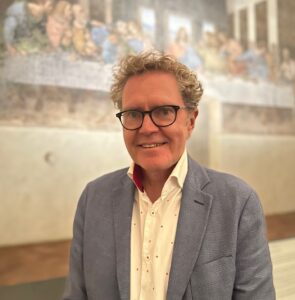 |
Tuesday 8 September 2026The Bookseller of Florence: Illuminating the RenaissanceRoss King Ross King explores the world of Florence’s manuscript hunters, scribes and booksellers, focusing on Vespasiano da Bisticci and the changing world of learning at the dawn of print. About the SpeakerRoss King is the award-winning author of books on Italian and French art and history. Among his many books are Brunelleschi’s Dome, Michelangelo and the Pope’s Ceiling, and Mad Enchantment: Claude Monet and the Painting of the Water Lilies. He has also published a biography of Niccolò Machiavelli and The Shortest History of Italy and The Shortest History of Ancient Rome. About the LectureThe Florentine Renaissance conjures images of beautiful frescoes and elegant buildings—the handiwork of the city’s artists and architects. But equally important were Florence’s manuscript hunters, scribes, scholars and booksellers who, through the discovery and diffusion of ancient knowledge, imagined a new and enlightened world. At the heart of this activity was Vespasiano da Bisticci, known as ‘the king of the world’s booksellers’. His books were copied by talented scribes, illuminated by miniaturists and prized by popes, kings and princes across Europe. The lecture also considers the arrival of the printing press and the transformation of knowledge that followed. |
Tuesday 13 October 2026The Power Behind the Throne: The Women Who Built Maharajah Ranjit Singh’s KingdomDr Priya Atwal Dr Priya Atwal looks beyond Ranjit Singh himself to recover the queens and princes who helped shape the Sikh Empire and its rise and fall. About the SpeakerDr Priya Atwal is the Community History Fellow at the University of Oxford, where she is building a new hub for ethical, innovative community-university partnership projects. Her academic research focuses on empire, monarchy and cultural politics across nineteenth-century Britain and South Asia. Her first book, Royals and Rebels: The Rise and Fall of the Sikh Empire, was published in 2020. She also works as a historical consultant and has collaborated with Historic Royal Palaces, among others. About the LectureIn late eighteenth-century India, the glory of the Mughal emperors was fading, and ambitious newcomers seized power. Enter Maharajah Ranjit Singh, whose Sikh Empire stretched throughout north-western India into Afghanistan and Tibet. Dr Atwal shines fresh light on this long-lost kingdom, looking beyond its founding father to restore the queens and princes to the story of the empire’s rise and fall. She traces a self-made ruling family shaped by Sikh, Mughal and European ideas of power, before the empire succumbed to gendered family politics and British expansion. |
 |
 |
Tuesday 3 November 2026Nazi Germany ‘Hitler’s Volksgemeinschaft (’National Community’): Inclusion and Exclusion’Dr Lisa Pine This lecture examines Nazi ideas of the Volksgemeinschaft, propaganda, exclusion and the regime’s attempt to reshape German society. About the SpeakerLisa Pine is a Fellow of the Institute of Historical Research, University of London, and a Fellow of the Royal Historical Society. Her main research interests are the history of Nazi Germany and the Holocaust. She is the author of several books on Nazi Germany, including Nazi Family Policy, 1933–1945, Hitler’s “National Community”: Society and Culture in Nazi Germany, and Education in Nazi Germany. About the LectureOnce Hitler came to power in January 1933, the Nazi Party began a concerted effort to homogenise German society and bring the population round to an acceptance of National Socialism. The regime aimed to break down traditional and sectional loyalties and replace them with a new national consciousness. This lecture examines the Nazi concept of the Volksgemeinschaft and explores how the regime sought to achieve it through propaganda, the leadership cult and policies directed at workers, young people and women. It also considers those excluded from the ‘national community’, including Jews, Roma and Sinti, and other persecuted groups. |
Tuesday 8 December 2026
Annual General Meeting & Christmas Social
Members’ meeting and social event
Join us for our Annual General Meeting as we reflect on another successful year of lectures and activities, followed by our Christmas Social.
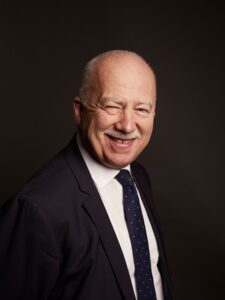
Tuesday 12 January 2027Louis XIV, Britain and the Battle for Europe: From Ireland to UkraineDr Philip Mansel Philip Mansel examines Britain’s role in the struggle to prevent Louis XIV from dominating Europe, linking dynastic politics, diplomacy and war across the continent. About the SpeakerDr Philip Mansel is a historian of France and the Middle East. His books include biographies of Louis XVIII and the Prince de Ligne, as well as King of the World: The Life of Louis XIV. He has also written Constantinople, Levant, and Aleppo, and writes for The Spectator, The Art Newspaper, Cornucopia and the Times Literary Supplement. About the LecturePhilip Mansel recounts Britain’s critical role in the struggle to prevent Louis XIV from dominating Europe. William III and the Duke of Marlborough maintained Britain’s alliances with the Netherlands and the Holy Roman Empire. The lecture also follows court politics, dynastic questions and the wider European balance of power, showing how Louis XIV, William III and Marlborough reveal Britain’s central place within the diplomatic and cultural systems that shaped Europe. |
 |
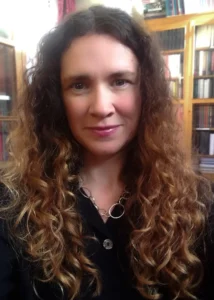 |
Tuesday 9 February 2027The British Industrial Revolution and the Making of the Modern WorldProfessor Emma Griffin Professor Griffin explores why Britain underwent a transition to sustained economic growth and how working people’s experiences shaped modern industrial society. About the SpeakerEmma Griffin is Professor of Modern British History at Queen Mary University of London and former President of the Royal Historical Society. She is the author of several books, including Liberty’s Dawn and Bread Winner. She is currently writing a global history of industrialisation for Penguin Press. About the LectureThis lecture explores historians’ fascination with the emergence of modernity, asking why the West—and Britain in particular—underwent a transition to sustained economic growth towards the end of the eighteenth century. Drawing on comparative evidence from Britain, France and the United States, and focusing particularly on the experiences of working people, Professor Griffin offers fresh insights into the cultural forces that helped shape the rise of the modern industrialised world. |
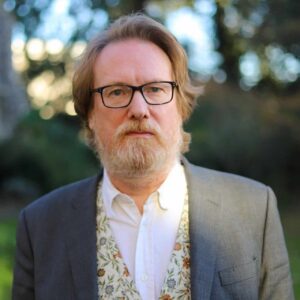
Tuesday 9 March 2027Empress Theodora: From Courtesan to QueenDr Fiona Haarer Dr Haarer traces the extraordinary life of Theodora, wife of Emperor Justinian, and explores her influence in Byzantine politics, religion and society. About the SpeakerDr Fiona Haarer is a Lecturer at King’s College London. She studied Classics at the University of Oxford before completing an MPhil and DPhil in Byzantine Studies. She is the author of Anastasius I: Politics and Empire in the Late Roman World and Justinian: Empire and Society in the Sixth Century, as well as numerous articles on the fifth and sixth centuries. About the LectureThis lecture traces the extraordinary life of Theodora, wife of the Emperor Justinian. Her early life in the theatre was described in sensational terms by Procopius in his Secret History. As empress, she exercised considerable influence over Justinian, played an important role in shaping Church policy and social reform, and was commemorated throughout the Byzantine world. |
 |
 |
Tuesday 13 April 2027The Lambeth Walk: Why Britain Rejected Extremism in the 1920s and 30sAlwyn Turner Alwyn Turner examines why Britain resisted authoritarian politics in the interwar years and the cultural forces that shaped that response. About the SpeakerAlwyn Turner is a cultural and political historian who lectures at the University of Chichester. His books include Little Englanders, A Shell-Shocked Nation, and the forthcoming Shakin’ All Over. About the LectureAt a time when much of Europe embraced authoritarian governments, Britain followed a different path. It developed neither a substantial far-left movement comparable to France nor a significant far-right movement like those elsewhere on the continent. This lecture explores the cultural factors behind Britain’s rejection of political extremism during the 1920s and 1930s, including the influence of the BBC, the British Legion and the British Board of Film Censors. |
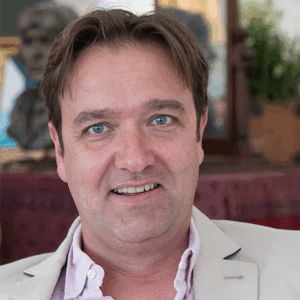
Tuesday 11 May 2027Mass Observation, Memory and the End of the Second World War in BritainProfessor Lucy Noakes Professor Noakes explores how the Second World War has been remembered in Britain, from Mass Observation writings to its modern cultural afterlife. About the SpeakerProfessor Lucy Noakes is the Rab Butler Professor of Modern History at the University of Essex and President of the Royal Historical Society. Her research focuses on the experience and memory of the two world wars in Britain. Her books include Dying for the Nation and The People’s Victory: VE Day Through the Eyes of Those Who Were There. About the LectureThe Second World War can sometimes feel omnipresent in twenty-first-century Britain. Drawn upon by political leaders during the Covid-19 pandemic and by campaigners during the Brexit debate, it continues to shape films, television, novels and popular culture. This lecture explores how the memory of the conflict has been used, why it continues to resonate so strongly, and how it was remembered in its immediate aftermath through the words of the Mass Observation writers at the end of the war. |
 |
 |
Tuesday 8 June 2027Gender and the Glove in Early Modern EnglandProfessor James Daybell Professor Daybell shows how gloves shaped gendered relationships of power in everyday life, politics and culture in early modern England. About the SpeakerProfessor James Daybell is Professor of Early Modern British History at the University of Plymouth, President of the Historical Association, and a Fellow of the Royal Historical Society. He has authored and edited numerous books, and is also the co-presenter and writer of the Histories of the Unexpected podcast with Dr Sam Willis. About the LectureThis lecture explores the remarkable power of a seemingly ordinary object in early modern England: the glove. Drawing on a wide range of historical, literary and material sources, it shows how gloves shaped—and were shaped by—gendered relationships of power in everyday life, politics and culture. Gloves were gifts, symbols of loyalty and remembrance, and objects that later acquired new meanings in family collections and museums. The glove provides a vivid lens through which to understand how objects can create, express and preserve gendered power across centuries. |
Join Us This Season
Our lectures are open to everyone, whether you’re a longstanding member or visiting us for the first time.
Members: Included with annual membership (£20)
Visitors: £5 per lecture
Students: Free
Whether you attend a single lecture or the full programme, you’ll be joining a friendly community of people with a shared passion for history.
For a list of previous years speakers and topics, click here.